The Quiet Season Trip Kit
A trip after the crowds have gone: every month's weather scored, the timetable's longest gap, the last leg in daylight, the saving net of the nights the quiet season adds, a contingency that covers the wait, and a trip card left with someone at home
NoTourists' free calculators each answer one question. The Off-Season Savings Calculator says how much less the room and the flights cost out of season; the Best Time planner ranks months by crowds and weather; the Multi-Leg Travel Time Estimator times the journey; the Remote Trip Budget Estimator adds a contingency. They never meet, so the saving counts nothing the quiet season adds: a boat that runs three days a week instead of every day, a sunset at a quarter to six, a night spent waiting. The Quiet Season Trip Kit makes them meet on one worked trip, then on yours. With the calculator's opening example, 7 nights for two, the $950 saving (37.1%) is a ceiling: after a night on the way in, because the last leg would end after dark, it is $770, and if one three-a-week boat is missed it is $480. The kit scores every month's weather before trusting the quiet one, finds the timetable's longest gap, works out the latest start that leaves an hour of daylight, and sets the budget's contingency to cover the longest wait (21% instead of 15% in the example). Every price is an illustration from the calculators' own opening figures as of September 2026, not a quote, and the kit promises no saving. It is not medical or safety advice for any place: it points you to your government's travel advisory, insurance that covers medical evacuation, a trip card with check-in and alarm times, offline maps and a way to call for help without signal, and a travel clinic or CDC Travelers' Health. Includes 7 steps, 4 printable working pages, a timetable and daylight table, and a personalised sheet worked out from the numbers you enter in the calculators.
Look inside
Two full pages from the kit, exactly as printed. Click either to read it at full size before you decide.
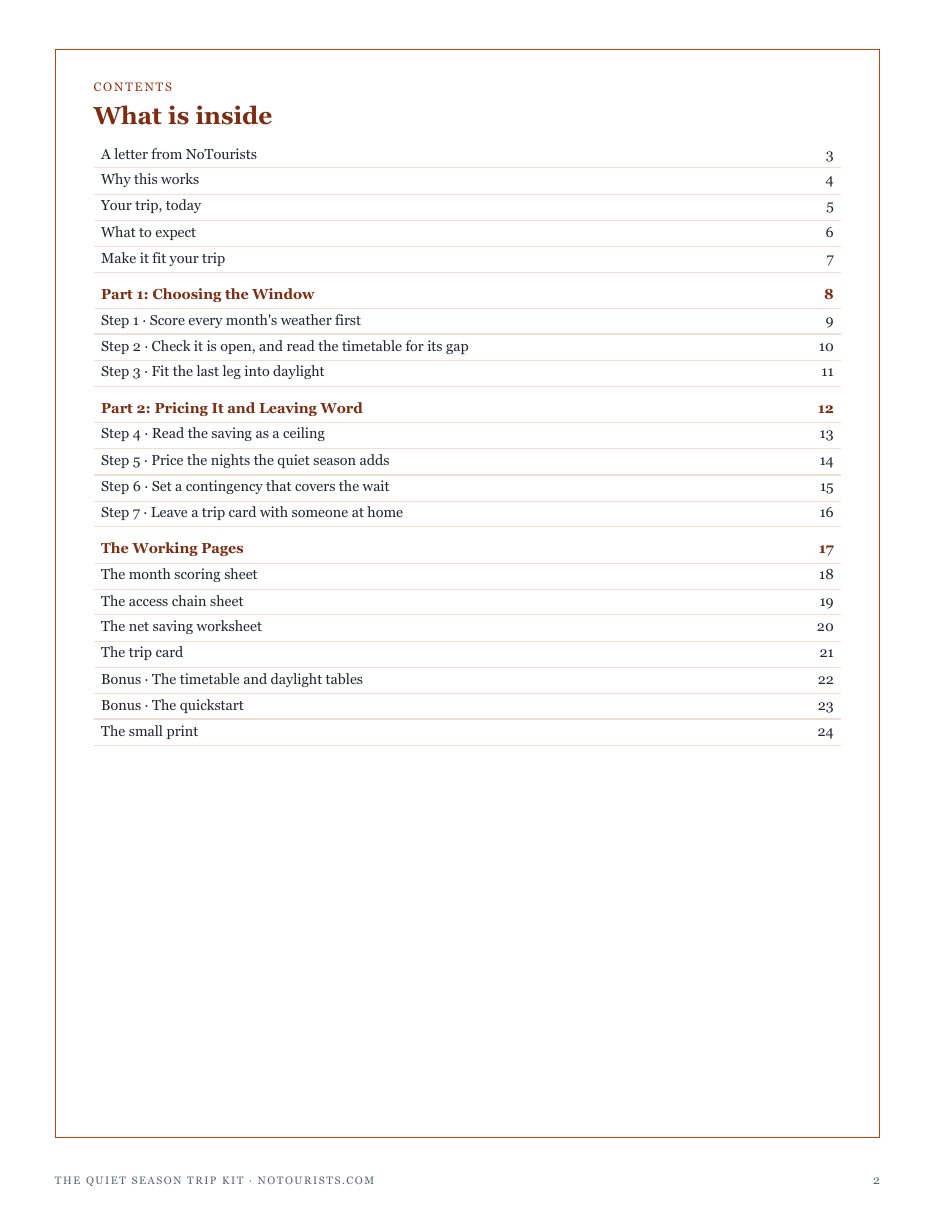
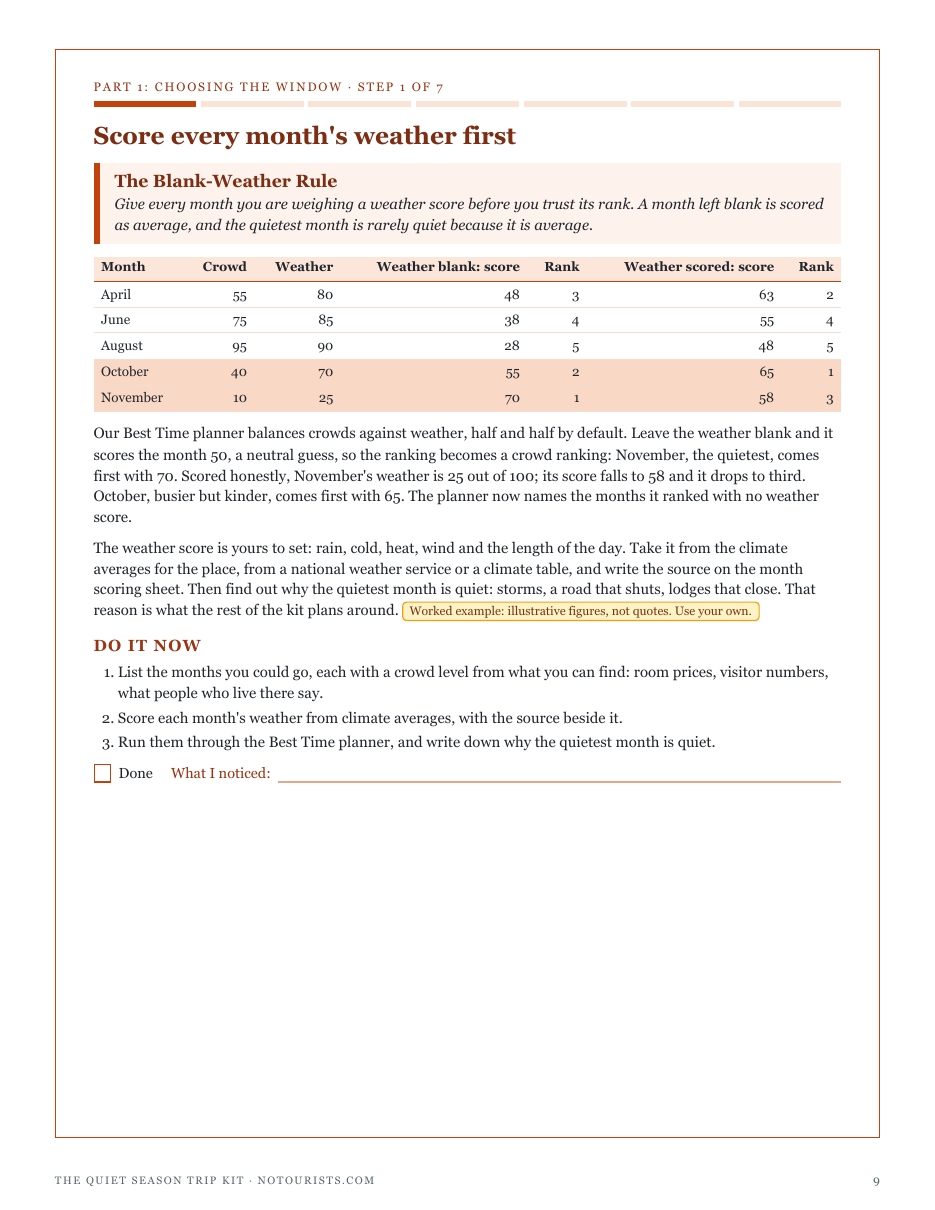
What is in it
- The Blank-Weather Rule: the month ranking with the weather left blank and scored, from the Best Time planner
- The Longest-Gap Rule: departures a week against the longest wait if one is missed, and confirming it runs on your dates
- The Hour-of-Daylight Rule: the door-to-door chain against sunset, the latest start, and when to stop the night on the way
- The Ceiling Rule: the Off-Season Savings Calculator's figure as the most the season can save
- The Extra-Nights Rule: pricing the nights the quiet season adds, and the net saving if every departure runs and if one is missed
- The Cover-the-Wait Rule: a Remote Trip Budget contingency that covers the longest wait, and the total to set aside
- The Trip Card Rule: check-in and alarm times, plus the advisory, evacuation cover, offline maps and a way to call for help
- Four printable working pages: month scoring sheet, access chain sheet, net saving worksheet, trip card
- Bonus: timetable and daylight tables, and a quickstart
- A personalised sheet worked out from your own calculator inputs
- ✓ 24 printable pages
- ✓ 10 sections, worksheets and templates
- ✓ A second PDF worked out from the numbers you enter
- ✓ No account needed, just an email address
- ✓ Instant download; link valid 7 days
Price includes any taxes. Sold by GrabURL, who handle checkout and support. The charge appears on your statement as GrabURL.
The kit picks up where the free Off-Season Savings Calculator leaves off. The calculator counts what the room and the flights save out of season; the kit uses the Best Time plannerwith every month's weather scored, times the journey with the Multi-Leg Travel Time Estimator against the sunset, prices the nights a thinner timetable can add, and sets the Remote Trip Budget Estimator's contingency to cover the wait. Every price in it is an illustration, not a quote, and it promises no saving. It is a planning kit, not medical or safety advice for any place: it points you to your government's travel advisory, insurance that covers evacuation, a trip card left with someone at home, offline maps and a way to call for help without signal, and a travel clinic or CDC Travelers' Health.