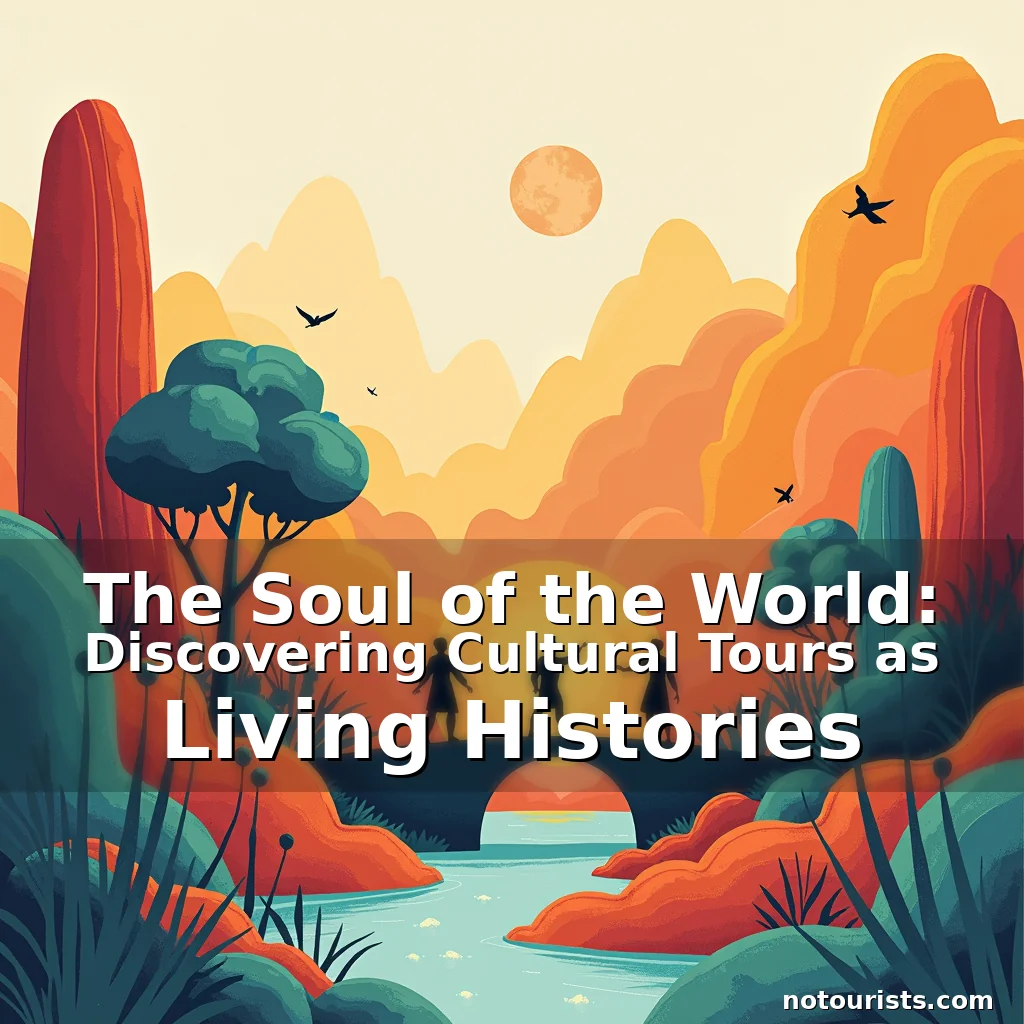
The Soul of the World: Discovering Cultural Tours as Living Histories
Cultural tourism is an immersive journey through humanity’s shared heritage, offering travelers a chance to experience traditions that have shaped civilizations across millennia.
This form of travel transcends conventional sightseeing by inviting participants to engage deeply with local customs, art forms, and historical narratives that define communities around the globe.
Unearthing Timeless Traditions Through Immersive Experiences
Cultural tours provide unparalleled access to rituals and practices that have been passed down through generations, often unchanged since ancient times.
From witnessing sacred ceremonies in Kyoto temples to participating in Andean music festivals, these experiences offer direct engagement with living histories rather than static museum exhibits.
- Authentic interactions: Travelers can learn traditional crafts from indigenous artisans instead of merely viewing their work in galleries.
- Sensory immersion: Smells of street food markets, sounds of folk music performances, and textures of handwoven textiles create multi-dimensional memories.
Preserving Heritage Through Responsible Tourism Practices
Ethical cultural tourism prioritizes preservation over exploitation while respecting the autonomy of host communities.
Responsible tour operators implement guidelines that ensure fair compensation for local guides and protect sacred sites from commercialization.
Measuring Impact: The Numbers Behind Sustainable Culture Tourism
A UNESCO report found that sustainable cultural tourism contributes up to 38% of global tourism revenue while supporting conservation efforts worldwide.
In Bhutan, the government’s high-value low-volume tourism model has preserved over 90% of its cultural heritage sites despite modernization pressures.
Diverse Cultural Tapestry: Exploring Global Traditions
Each continent offers distinct cultural landscapes that reflect centuries-old exchanges between peoples and environments.
Africa’s vibrant storytelling traditions, Asia’s spiritual pilgrimage routes, Europe’s medieval architecture, and South America’s indigenous knowledge systems each tell unique stories of human adaptation.
- Transcontinental connections: Silk Road history links Middle Eastern calligraphy techniques with Chinese papermaking innovations.
- Indigenous wisdom: Aboriginal Dreamtime stories in Australia preserve ecological knowledge dating back tens of thousands of years.
Beyond Borders: How Cultural Exchange Shapes Modern Identity
Exposure to different cultures fosters empathy and understanding among travelers who might otherwise remain isolated within homogenous societies.
Language learning workshops during tours facilitate deeper communication with locals, creating bonds that transcend linguistic barriers.
Shared meals at family-run eateries become microcosms of cross-cultural dialogue where culinary traditions are exchanged alongside personal stories.
These intimate encounters challenge preconceived notions about ‘the other’ by revealing commonalities beneath surface differences.
Technological Innovations Enhancing Cultural Exploration
Digital tools now allow tourists to explore cultural artifacts remotely before visiting physical locations, enhancing overall appreciation levels.
Virtual reality reconstructions enable visitors to walk through ancient ruins without damaging fragile archaeological sites.
Augmented reality apps overlay historical information onto real-world landmarks, transforming ordinary cityscapes into interactive storybooks.
Mobile translation devices break language barriers, allowing authentic conversations with local residents.
Navigating Challenges in Cultural Tourism Development
Rapid globalization threatens to erode traditional practices as younger generations adopt urban lifestyles disconnected from ancestral ways.
Tourism infrastructure development sometimes disrupts delicate cultural ecosystems when profit motives override preservation priorities.
Over-tourism in iconic destinations strains local resources and diminishes the authenticity of cultural experiences.
Smart regulation frameworks must balance economic benefits with long-term sustainability goals for both people and places.
Forging New Pathways in Ethical Cultural Engagement
Emerging models prioritize co-creation between travelers and hosts rather than one-sided observation of culture.
Homestay programs place guests in local households, fostering daily interaction with resident families and their routines.
Community-led initiatives give locals agency over how their traditions are presented and monetized.
This participatory approach builds mutual respect and ensures cultural expressions remain true to their origins.
Conclusion
Cultural tourism represents more than just leisure travel; it serves as a vital bridge connecting past legacies with present realities.
To fully appreciate these journeys, seek out ethical operators committed to preserving authenticity while ensuring meaningful exchange between travelers and host communities.
“`