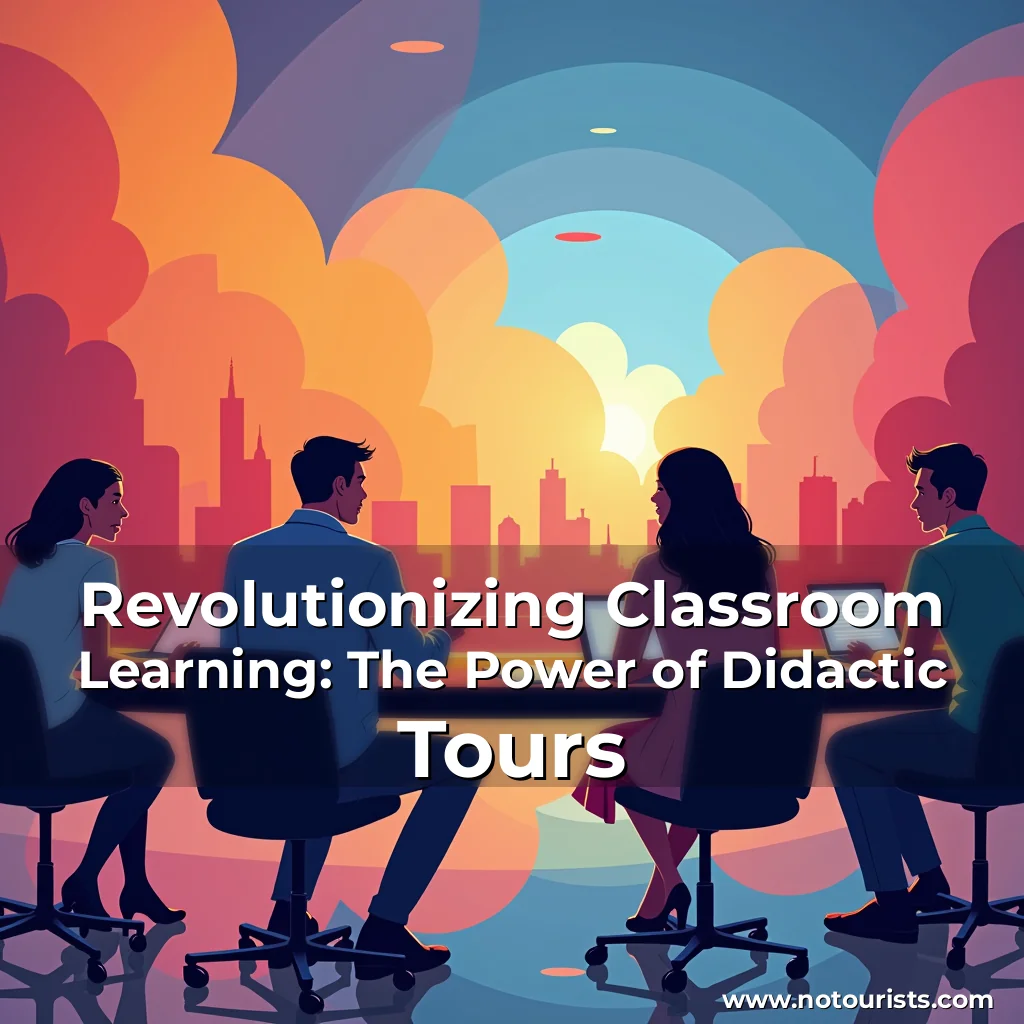
Didactic tours are transforming the way students learn and experience education. By taking textbooks to real-life locations, these tours provide experiential, interactive journeys that have long-lasting effects.
From work icons to environmental geographical strike, didactic tours help learners bind real-life examples with theory.
These tours are often provided by companies specializing in educational travel or organized through schools and institutions. The goal is to lay the groundwork for learning real-life examples that reinforce and enrich classroom teachings.
Benefits of Educational Tours
• Real-World Learning
Research indicates that students learn and retain information more effectively when learning from real-life encounters.
- Seeing a location, hearing testimonies, and viewing products firsthand enables students to make emotional and intellectual connections with the content.
- Studies have shown that this approach accelerates learning and retention by up to 75% compared to passive learning methods.
Cultural Awareness and Global Perspective
• Cultural Awareness and Global Perspective
Travel broadens students’ minds to diverse cultures, customs, and values other than their own.
- Visiting a museum in a foreign country, for example, allows students to appreciate local customs and history.
- Sampling food in a foreign city helps students understand different culinary traditions and cultural practices.
Personal Growth
• Personal Growth
Group travel from home develops independence, responsibility, and people skills.
- Students learn to make decisions, work together, and develop essential life skills.
- These experiences often surpass the benefits of traditional training and development programs.
Selecting the Best Didactic Organization
• Selecting the Best Didactic Organization
Using the correct provider guarantees a safe, enriching, and organized encounter.
| Key Components | Description |
|---|---|
| Customized Itineraries | Tailored to unusual academic topics, these itineraries ensure a personalized learning experience. |
| Native Guides | With pedagogical backgrounds, these guides provide expert-led learning experiences. |
| 24/7 Assistance | Providing support and guidance throughout the tour, this ensures a seamless learning experience. |
Pre-Tour Planning
• Pre-Tour Planning
Successful tours begin with thorough planning and preparation.
Tour companies usually offer lesson plans, reading materials, or project outlines to aid students in preparation.
This helps students engage with the learning material and builds a strong foundation for the tour.
On-the-Ground Learning
• On-the-Ground Learning
While traveling, students participate in hands-on activities, such as workshops, guided tours, and community service.
This active learning approach helps students construct essential knowledge and develop real-world problem-solving skills.
Post-Tour Activities
• Post-Tour Activities
After the tour, students consolidate their knowledge through group discussions, presentations, or lot assignments.
These activities help students reflect on their learning experience and make connections to their personal and academic development.
Trends in Educational Travel
• Trends in Educational Travel
Educational tours today are no longer mere sightseeing excursions.
Some trends include:
- Sustainability-conscious travel, exploring eco-tourism, conservation, and green tech.
- STEM tours focused on science and math learning.
- Service-learning tours that incorporate volunteering and community service.
- Digital storytelling, where students document their experiences through blogs, videos, or social media.
Conclusion
Educational tours are transforming the way students learn and experience education. By venturing out of the classroom, students receive not merely academic enrichment but also emotional quotient, cultural competence, and lasting memories.